The Future of OHS Ergonomics Workstation Assessment in Activity‑Based Workplaces
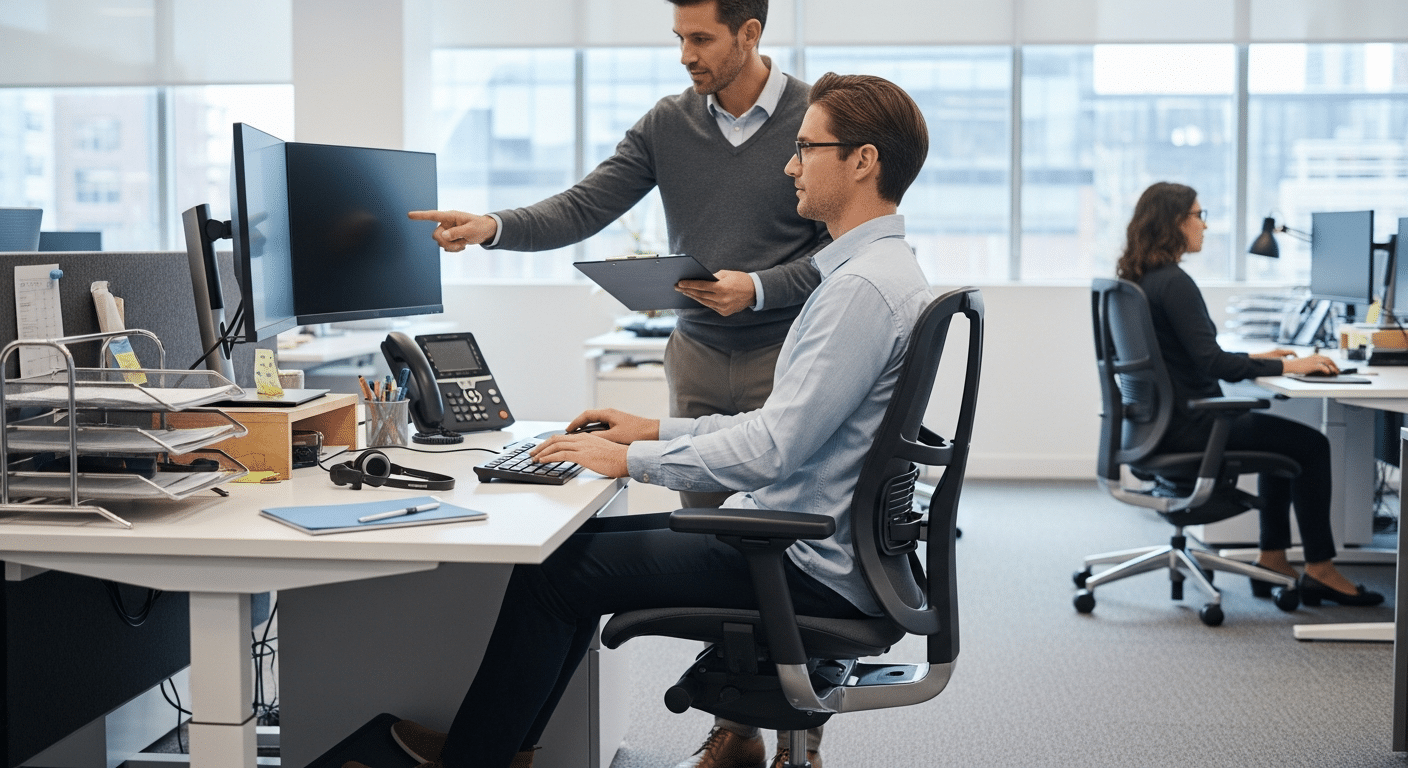
Activity-based work environments are becoming more common in today’s fast-paced workplaces. Employees now move between different workstations throughout the day because there are flexible spaces for working together and focusing. This change has a lot of good things about it, but it also makes it harder for employees to stay healthy and get work done. An OHS Ergonomics Workstation Assessment is one important way to make sure that these changing workplaces are safe and comfortable. Companies can stop common ergonomic problems like back pain, eye strain, and fatigue by checking out workstations and making any necessary changes. In this blog, we’ll talk about how ergonomics assessments are changing the future of activity-based workplaces by helping businesses make spaces that are comfortable and productive.
1. What does the future hold for ergonomics in workplaces where people do activities?
The future of ergonomics in ABW settings will focus on being flexible, customising, and using data to make decisions. Ergonomics needs to be just as flexible as workspaces are becoming. Instead of just looking at one workstation, the focus is shifting to looking at whole work journeys how employees move, sit, work together, and switch between tasks throughout the day.
Expect more use of technology, such as sensors, AI-guided posture feedback, and virtual assessments. These new ideas help people get insights faster and more accurately without getting in the way of their work. Ergonomics will also go beyond the office to home and satellite workspaces as remote and hybrid work become more common. This will make sure that people get the same support no matter where they are.
Ergonomists will give companies more strategic advice on how to create environments that are good for people and boost productivity. The best companies will be the ones that make ergonomics a part of their daily work culture.
2. How can OHS ergonomics workstation assessments help workers get more done in activity-based workplaces?
Ergonomics has a direct effect on productivity because it makes it easier and more comfortable for employees to do their jobs. In ABW settings, workers often move from one work zone to another, which can cause support to be inconsistent or awkward postures. A structured OHS Ergonomics Workstation Assessment finds risks early and makes sure that workers can set up their equipment correctly in any situation.
Workers have fewer distractions, fatigue, and musculoskeletal problems when their discomfort goes down. This means better focus, fewer interruptions while working, and better performance all day long. Ergonomic advice also helps people develop better habits, like how to use sit-stand desks properly or how to choose the best workstation for each job.
Some companies that do regular ergonomic assessments say that their injury rates go down, their employees miss fewer days of work, and their employees are happier. This means smoother workflows, better collaboration, and higher overall productivity in fast-paced ABW settings.
3. What are the most important trends in OHS ergonomics assessments for workplaces that are flexible?
There are a few big trends that will shape the future of ergonomics in ABW settings:
- Assessments that include both hybrid and remote work
Ergonomists now look at both home and office setups, using virtual tools or online ergonomic workstation assessment platforms to make sure that all locations are the same.
- Smart technology and AI
Smart cushions, posture-tracking apps, and sensors built into office furniture give real-time feedback that helps workers make changes right away.
- Ergonomics based on data
Workplace analytics, like how often people use their workstations or how they move around, help find risk areas and make choices about how to design workspaces or upgrade equipment.
- Digital modelling and virtual reality (VR)
Before building a workspace, VR simulations can be used to find ergonomic risks. Digital twins can check the layouts of workstations, which makes planning more accurate.
- Ergonomic tools that you can use yourself
Digital assessments and micro-learning modules that employees can do on their own are now available to them. This gives them more control over their own health.
These trends show that ergonomics is becoming more proactive and technology-based, which fits in well with the modern workplace.
4. What kinds of tools or technologies are being used to assess OHS ergonomics in activity-based workplaces?
Modern ergonomics assessments now use both traditional observation and new technology to get a better picture of workplace risk. Some popular tools are:
- Platforms for digital risk assessment
These help ergonomists keep track of their findings, compare data, and give personalised advice quickly. - Systems for assessing ergonomic workstations online
These are great for hybrid teams and let businesses quickly check out remote or flexible work spaces without having to go to the site. - Wearable tech and sensors
Smart chairs, posture-tracking devices, and movement sensors keep an eye on behaviour in real time and warn of dangerous patterns like slouching or sitting for a long time. - Evaluations of high-resolution video
Ergonomists can see employees in their natural workspace through video calls for virtual assessments, which lets them give personalised advice right away. - Sit-stand desk controllers and app connections
Some desks have built-in reminders or analytics that help workers switch between sitting and standing safely.These tools work together to make OHS ergonomics assessments faster, more accurate, and give workers useful advice.
5. From an ergonomic point of view, how do activity-based workplaces affect the health and safety of workers?
Activity-based workplaces give employees freedom and choice, but they also pose ergonomic risks when employees don’t have consistent support at their workstations. Moving around a lot between desks can cause chairs to be set up wrong, monitors to be too high or low, or tasks to be done in places that aren’t meant for them.
Poor ergonomics can cause musculoskeletal disorders (MSDs), eye strain, neck and back pain, and tiredness. Employees may unknowingly adopt awkward postures if they don’t get the right training and evaluations. This is especially true when they’re rushing between meetings or working in casual breakout areas.
But when ergonomics is well-managed in ABW settings, workers are more comfortable, their minds are clearer, and the risk of injury is lower. To help people keep good habits, this needs training that is easy to get to, equipment that is easy to change, and regular tests. Well-designed ABW spaces also encourage movement, which can help with circulation, ease stiffness, and improve overall health.
6. What problems do OHS ergonomics assessments face in activity-based workplaces?
There are a number of problems that come up when doing ergonomics assessments in ABW settings:
- Setups that are always changing
It’s harder to judge one consistent workstation when there are shared desks and rotating workspaces. - Not much time to make changes
Employees often switch between tasks quickly, so they don’t have much time to adjust chairs or monitor heights correctly. - Different ways of working
Some jobs need people to work together a lot, while others need people to focus deeply. This means that one ergonomic solution won’t work for everyone. - Inconsistencies in the home office
Remote setups may not have furniture that can be moved or enough room, which makes them more dangerous. - Awareness of employees
A lot of workers don’t know how to set up their workstations correctly, so they might need help with it on a regular basis.
Even with these problems, structured assessments, digital tools, and ongoing training help companies use ergonomics effectively in a wide range of settings.
7. What can businesses do to make sure that activity-based workspaces meet OHS ergonomics standards?
To meet OHS ergonomics standards in ABW workplaces, you need to take a proactive and systematic approach:
- Do regular OHS Ergonomics Workstation Assessments
Evaluate workers in all kinds of workspaces, not just those with fixed desks.
- Give people equipment that is easy to use and can be changed.
Employees should be able to easily change the chairs, monitors, and sit-stand desks they use.
- Give people training and quick-reference guides
Short videos or cards that show how to set up a workstation give employees the tools they need to fix their mistakes when they move from one area to another.
- Use digital tools for teams that work together in person and online
Online ergonomic workstation assessment platforms help make sure that all remote workers get the same help.
- Check to see if the rules are being followed and follow up.
Keep good records, check ergonomics often, and make sure to review changes to equipment or layout when necessary.
Businesses can make ABW environments that are both safe and productive by making ergonomics a part of their daily work.
Activity-based workplaces are here to stay, and so is the need for ergonomics that can change and adapt. We need to change how we evaluate and help employees as their work environments change. Ergonomics is now an important part of making people more comfortable, healthy, and productive, whether it’s through technology-enhanced tools, online tests, or smart workspace design.
By making OHS ergonomics a top priority, companies can lower the risk of injuries, increase productivity, and give their employees a work environment that really helps them.